Ten Digits You Actually Owned: On the Dying Art of Knowing Your Own Number
Ask someone their phone number right now. Not a friend's number — their own. Watch what happens. There's a good chance you'll see a pause, maybe a laugh, maybe a slow reach for the phone to check. Not because they're dumb. Because the number lives in the device, not in them.
That's a genuinely strange thing to sit with if you grew up before smartphones swallowed everything. For a long time, your phone number was yours in the way your name was yours. You knew it. You said it out loud. You wrote it on forms without hesitating. It was a small, reliable piece of your own identity.
Now most of us couldn't tell you.
What a Number Used to Mean
Lena Marsh is 61 and lives outside of Knoxville. She still knows four phone numbers by heart: her own, her late mother's landline, her childhood best friend's house number, and the number she had in her first apartment in 1988. She can recite all of them without blinking.
"A phone number was how you existed," she says. "If you wanted someone to be able to reach you, you gave them that number. It was deliberate. It meant something."
That deliberateness is the part that's easy to forget. Handing over your number used to be a small act of trust. You were giving someone access. You were saying: here is the string of digits that gets to me. There was weight to that. You chose who got it.
Now your number is on every form, every app, every two-factor authentication prompt. It's a utility. It's a recovery code. It's the thing you type in to get a coupon. The intimacy has been completely stripped out.
The Ones Who Still Know
David Okafor is 34, works in software, and knows his number cold. He also knows it's unusual among his peers.
"I made a point to memorize it when I first got this number," he says. "I don't know why exactly. It felt weird to have a number and not know it. Like owning a house and not knowing the address."
That analogy lands. There's something slightly absurd about carrying a device defined by a unique number and having no idea what that number is. But absurdity is just normalcy that arrived faster than we expected.
For Okafor, knowing his number is partly practical — he's had moments where he needed to give it out and his phone was dead — but it's also something quieter than that. "It's mine," he says, simply. "I like knowing it."
Caroline Reyes, 27, is on the opposite end. She genuinely has no idea what her number is. She's had it for five years. "I've never needed to know it," she says, not defensively, just matter-of-factly. "If someone needs my number, I just show them my phone or AirDrop them my contact. Why would I memorize it?"
She's not wrong. The infrastructure has changed. The need evaporated. But there's still something in the gap between her answer and Lena's that feels worth examining.
The Landline Was a Place. The Cell Was a Person.
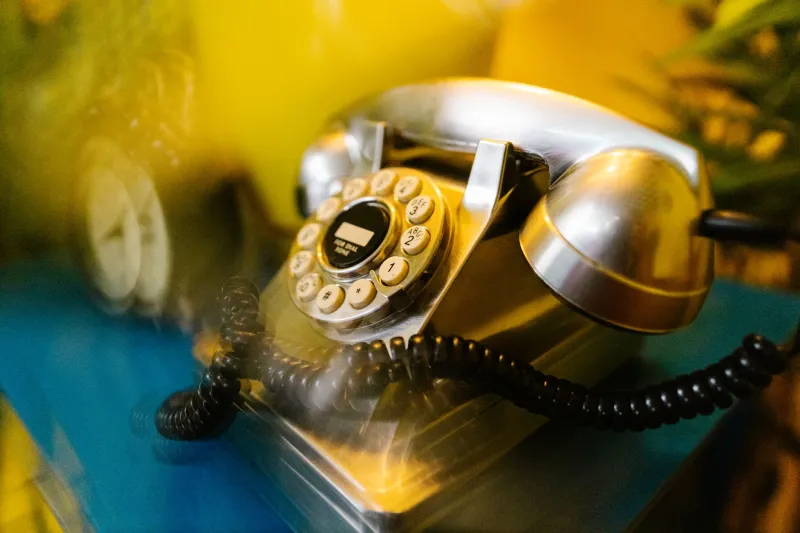
Here's the shift that made phone numbers personal in a new way: when mobile phones replaced landlines, numbers stopped being attached to locations and started being attached to people.
Your parents' home number reached the house. Whoever picked up, picked up. Your cell number reached you specifically, wherever you were. That was revolutionary in 1998. It meant the number was more intimate than ever — it was a direct line to a human being, not a building.
And then, almost immediately, we stopped memorizing them.
The contacts list made memory irrelevant. Why hold ten digits in your head when the phone holds a thousand? It's rational. It's efficient. It's also the moment the number stopped feeling like yours and started feeling like metadata.
Marco Delgado, 52, a high school history teacher in Phoenix, frames it as a kind of outsourcing. "We outsourced the memory of who we are to a machine," he says. "That sounds dramatic but I mean it literally. The machine knows your number. You don't. At some point you have to ask who's in charge of your own identity."
The Emotional Weight Nobody Expected
There's grief in here, weirdly enough. Not grief for the number itself — but grief for the version of yourself that knew it. That had a reason to know it. That handed it over on purpose.
Lena Marsh talks about her mother's landline number the way some people talk about a childhood home address. It's gone — the number was disconnected years ago — but she still has it memorized. "Knowing that number feels like still having a little piece of her," she says. "I don't want to forget it."
That's not nostalgia for technology. That's just the way memory works. The things we rehearsed, the things we repeated, the things we gave and received deliberately — those stick. The things we delegated disappear.
Your phone number, for most people alive right now, will leave no trace in memory. When you change it, it'll be gone. There's no grief for a number you never held.
Does It Actually Matter?
Maybe it doesn't. Caroline Reyes would say it doesn't, and she's living a perfectly connected life without ever memorizing ten digits. The functional argument is airtight: the phone knows. The phone is always there. Memorization is a workaround for a problem that no longer exists.
But there's a version of this that's about more than convenience. When you don't know your own number, you've handed a piece of your own identity to a device. Not dramatically — not in a way that costs you anything obvious. But the number that reaches you, the number that is you in the phonebook sense of the word, exists somewhere outside your head. You are, in a small but real way, dependent on a machine to know who you are.
David Okafor says it plainly: "I just think there's something to knowing the basics about yourself. Your address. Your number. The things that locate you. I don't want to have to look myself up."
That's the thing. Most of us would have to look ourselves up.
And we've decided that's fine. Which is probably fine. But it's also the kind of fine that's worth noticing — the slow, quiet way we keep handing small pieces of ourselves over, one delegation at a time, until the machine knows us better than we know ourselves.
Ten digits. You used to own them.
Do you still?