Hard Drive Faithful: The Collectors Who Still Own Every Song They've Ever Loved
Hard Drive Faithful: The Collectors Who Still Own Every Song They've Ever Loved
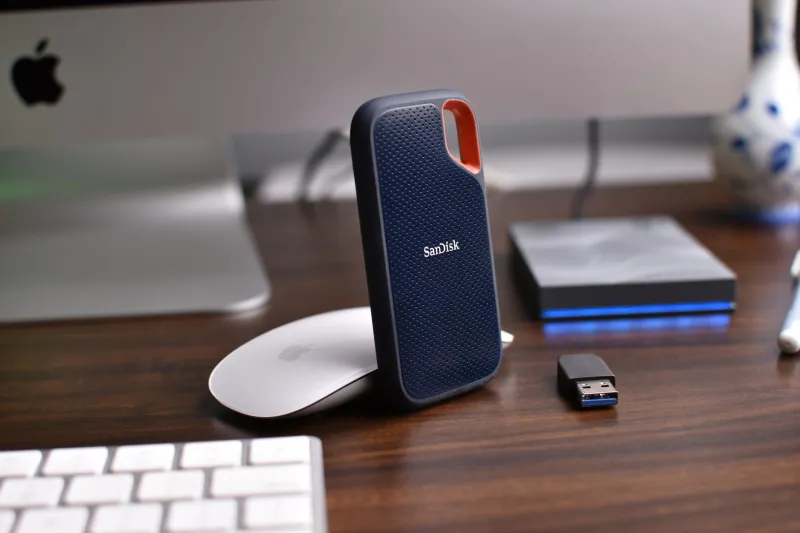
Marco has 47,000 songs on a hard drive sitting on his desk in Portland, Oregon. He knows roughly where everything is. Not because he memorized it, but because he built the whole thing himself — folder by folder, album by album, over about fifteen years. Ask him to find a B-side from a mid-2000s Chicago post-rock band and he'll have it playing before you finish the sentence.
"Spotify has more music than I'll ever hear," he says, "but it doesn't have my music."
That distinction — between access and ownership — is the whole universe for a quiet but surprisingly active subculture of local file collectors who have refused, politely or otherwise, to hand their listening lives over to a streaming platform. They rip CDs. They buy FLACs from Bandcamp and drop them into folder hierarchies they've spent years refining. They run media servers from old laptops in spare bedrooms. And they talk about their libraries the way other people talk about their bookshelves or record collections — as something that reveals who they are.
The Folder Is the Statement
If you want to understand a local file collector, ask them to walk you through their folder structure. It's not a neutral thing. It's a system of values.
Some organize by genre first, then decade, then artist. Others go alphabetically by last name, no exceptions, which means Bob Dylan lives under D and The National lives under N. A few build their libraries around moods or personal eras — one woman in Austin told us her top-level folders are literally named after apartments she's lived in, because that's how she remembers what she was listening to when.
"My whole twenties are in there," she said. "You can scroll through it like a timeline."
That's something streaming services structurally cannot replicate. Your Spotify history exists, technically, but it belongs to Spotify. It lives on their servers, under their terms, and it can disappear — or just change — without your input. The collectors we spoke with have all either experienced or witnessed the specific grief of a beloved playlist vanishing, a "liked songs" library getting corrupted, or an album getting pulled from a service mid-obsession. For them, those aren't edge cases. They're the whole argument.
Renting vs. Owning
There's an economic angle here that the collectors are pretty clear-eyed about. Streaming services have made music cheaper to access than ever, and nobody's pretending otherwise. But cheap access and ownership are different things, and that difference compounds over time.
David, a software developer in Minneapolis who has been collecting local files since the Napster days, puts it bluntly: "I've paid for the same Led Zeppelin albums three times in my life. Once on CD, once on iTunes, once on streaming. The streaming version is the only one I don't actually have."
He's not wrong, technically. A digital purchase on iTunes or Amazon Music gives you a file — or it used to, before DRM and cloud-only libraries blurred that line considerably. A streaming subscription gives you conditional access, revocable at any time, to a catalog that's also subject to change. Albums get pulled for licensing reasons. Artists go exclusive to competing platforms. The thing you loved last Tuesday might cost extra next Tuesday.
For collectors, the mental model is simple: if you can't put it on a hard drive you physically own, you don't own it. Everything else is a lease.
The Tagging Obsession
One thing that comes up constantly in conversations with local file collectors is metadata. Specifically, the deeply satisfying and slightly maddening practice of making sure every file is correctly tagged — artist name, album title, year, track number, genre, sometimes even album art sourced from specific pressings.
This is where the hobby tips from practical into devotional. Tools like MusicBrainz Picard, Mp3tag, and beets (a command-line library manager with a cult following) exist specifically for this purpose, and their user communities are active, opinionated, and kind of thrilling to lurk in.
"Bad tags bother me the way a crooked picture frame bothers someone else," said one collector in Nashville who asked to go by her username, Wrenfield. "It's not rational. But when the album year is wrong or the artist name is inconsistent, it feels like the record is lying about itself."
This level of care is, depending on your perspective, either a beautiful expression of devotion to music or an elaborate displacement activity. Possibly both. But what it produces is a library that functions as a genuine personal document — something curated, corrected, and maintained by one human over years of listening.
What Streaming Took, What It Didn't
None of the collectors we spoke with are anti-streaming in a simple sense. Most of them use streaming services for discovery, for background listening, for checking out something new before they decide whether it earns a permanent place in the library. The library is the commitment. Streaming is the browse mode.
"I think of Spotify like a record store I can walk through for free," Marco said. "But I don't live at the record store. I bring things home."
What streaming genuinely took, they'll tell you, is the culture of sitting with an album. When music is infinitely available and algorithmically surfaced, the friction that used to force intimacy — the fact that you only had so many CDs, that you'd listened to this one so many times you knew every breath and skip — disappears. The collectors have rebuilt that friction deliberately. They choose what goes in the library. That choice means something.
It also means something to listen from a library you built. There's no recommendation engine between you and the music. No "because you listened to" nudges. No autoplay bleeding one thing into another. Just the folder you opened, the album you chose, the version of yourself that put it there.
Sovereignty, Small Scale
There's a word that comes up a lot in these conversations: sovereignty. Not in a grandiose political sense, but in the small, daily sense of having a corner of your life that you actually control. Your hard drive doesn't go down for maintenance. It doesn't change its algorithm. It doesn't have a terms of service update that quietly revokes something you thought you had.
In an era when most of our digital lives are mediated by platforms we don't own, running on servers we'll never see, shaped by incentives we didn't agree to, the local file library is a genuinely countercultural act. It's not loud about it. It doesn't have a manifesto. It's just a folder called /Music sitting on a desk in Portland, organized exactly the way one person decided it should be, containing exactly what they chose to put there.
That's not nothing. In 2025, that might actually be something.
Marco's got a second hard drive as a backup, by the way. He's not taking any chances.