The Hidden Roll: What It Means That We've Started Hiding Our Lives From Ourselves

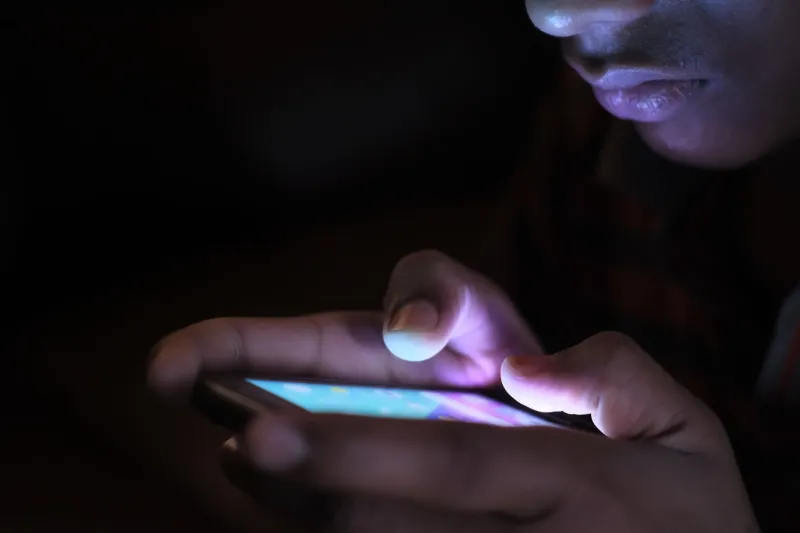
Photo by Photo by rawkkim on Unsplash on Unsplash
Somewhere on your phone, behind a face scan or a six-digit code, there's a version of your life that nobody else has seen. Maybe it's in Google Photos. Maybe it's a locked album in Apple's native app. Maybe you're paying $2.99 a month for an app called something like Keepsafe or Private Photo Vault that has a fake calculator interface on the front so no one knows what it actually is.
You're not alone. You might not even be in the minority anymore.
The shift from the performative photo dump—the Instagram grid, the Facebook album, the Snapchat story—to the private, encrypted, deeply personal photo vault has been one of the quieter behavioral revolutions of the last five years. Nobody announced it. There was no trend piece that started it. People just... stopped posting everything. And then they started hiding the things they still wanted to keep.
From the Feed to the Vault
To understand where we are, it helps to remember where we were. The early 2010s were the golden age of performative documentation. You photographed your food before you ate it. You posted your vacation in real time. You built a visual narrative of your life and you published it, more or less continuously, for an audience that ranged from your college roommates to people you'd met once at a conference in 2011.
The implicit logic was: if you didn't document it publicly, did it really happen? The photo existed to be seen. The memory was validated by its audience.
Something broke in that relationship—gradually, then all at once. The data scandals helped. The burnout helped more. The realization that your carefully curated grid was being used to sell you things, to profile you, to train models—that helped too. But underneath all of that was something more personal: a creeping sense that the performance was eating the experience. That you were living your life for the caption.
So people pulled back. And they pulled their photos with them.
The Architecture of Private Memory
Apps like Google Photos now offer locked folders as a core feature, not an afterthought. Apple built native album locking into iOS. Third-party vault apps have millions of downloads. The infrastructure for private photo storage has grown dramatically, and it's being used.
What's interesting is what people are putting in these vaults. Talk to enough people about their private photo collections and a pattern emerges: the hidden roll isn't full of sensitive or embarrassing content. It's full of the most important stuff. The mundane Tuesday afternoon with someone they love. The imperfect family photo where everyone's laughing too hard. The selfie taken right after something hard, when the face in the frame looks real in a way that's too vulnerable to post.
"I have thousands of photos that I would never put on Instagram but that I look at all the time," says Daniela, a 31-year-old in Denver. "They're not secret. They're just mine."
That distinction—not secret, just mine—is doing a lot of work. It suggests that privacy isn't the goal. Ownership is. The retreat from the feed isn't about hiding. It's about reclaiming.
Memory Without an Audience
But here's where it gets complicated. Memory, psychologists have long argued, is a social act. We remember things partly through the act of telling them. Shared photos prompt shared recollection. The story you tell about the picture shapes the picture itself.
When you lock your photos away—even from yourself, even inside an app you rarely open—you're changing the relationship between the image and the memory. The photo still exists, but the social scaffolding around it doesn't. Nobody else is tagging people, adding captions, surfacing it on the anniversary of when it was taken.
For some people, this feels like relief. "I don't need Facebook to remind me of my own memories," says Terrence, a 38-year-old in Atlanta. "If I remember it, I remember it. If I don't, maybe it wasn't that important."
For others, the private vault creates a strange new anxiety: the sense that life is being documented without being witnessed, preserved without being shared, kept without being known. A memory that exists only in an encrypted folder on a device that will eventually fail or be replaced.
Healing or Disappearing?
The honest answer is probably both, depending on the person and the day.
The retreat from performative documentation has been genuinely healthy for a lot of people. The pressure to produce shareable content from lived experience is a specific kind of modern stress, and stepping back from it has given many people permission to just be somewhere without also producing it.
But there's a version of the private vault that isn't healing—it's avoidance. The person who photographs everything and hides everything and looks at nothing. The archive that grows without being revisited, a life accumulating in storage like boxes in a basement.
The feed asked us to perform our lives. The vault asks us something harder: to live them for their own sake, to trust that the moment has value even when it's invisible, to be the sole audience for the things that matter most.
That's a more demanding relationship with memory than most of us were trained for.
But it might be the right one.