Everything You Used to Know by Heart: Mourning the Death of Memorized Things
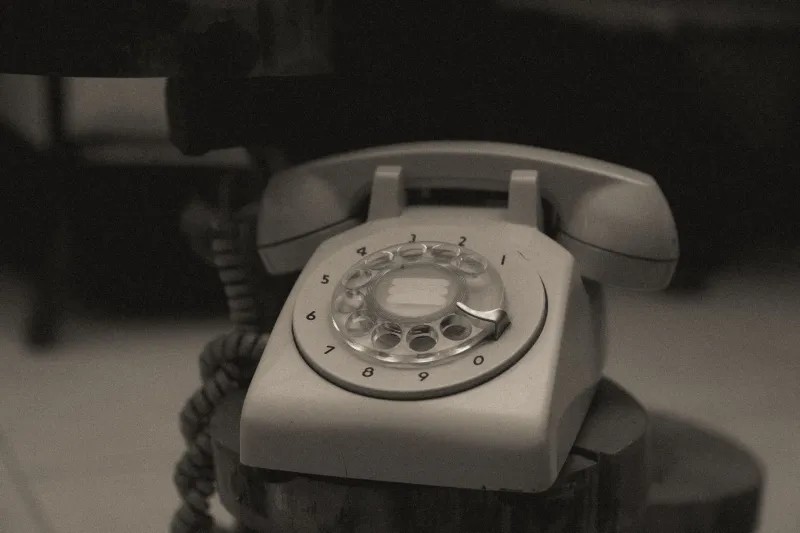
There was a number — seven digits, no area code — that lived in your fingers before it lived in your brain. You didn't think it. You dialed it. Your grandmother's house, maybe. Or your best friend from middle school. Or the pizza place on Elm Street that everyone's parents called on Friday nights. You could have recited it in your sleep, and sometimes, weirdly, you did.
That number is probably gone now. Not the number itself — it still exists somewhere, reassigned or abandoned — but your ownership of it. The felt knowledge of it. The way it sat behind your sternum like a small, warm fact that was entirely yours.
We are living through the last days of memorized things, and almost nobody is marking the occasion.
The Particular Weight of Things We Chose to Hold
Memoization used to be a form of intimacy. Not the grand, romantic kind — the quiet, domestic kind. The kind that accumulates in a life lived close to something.
Your library card number. Your student ID. The locker combination you spun every morning for three years until the motion became reflexive, almost meditative. These weren't impressive feats of recall. They were the residue of repetition, of choosing — consciously or not — to keep something near.
Psychologists have a term for the kind of memory that lives in your body rather than your conscious mind: procedural memory. But there's a category that doesn't have a clean clinical name, which is the memory of small, specific facts that become load-bearing walls in your sense of self. The things that, if someone asked you to prove you were you, you could produce without hesitation.
Passwords were the last major holdout in that category. And now they're leaving too.
The Quiet Handoff
Passkeys — the passwordless authentication system that Apple, Google, and Microsoft have been quietly rolling out — work through biometrics and cryptographic keys stored on your device. You don't create them, you don't memorize them, and you definitely don't write them on a Post-it note stuck to your monitor. The system handles all of it. You just... exist, and the door opens.
From a security standpoint, this is unambiguously better. Phishing attacks depend on you having a password to steal. Credential stuffing requires a credential. Passkeys eliminate most of the attack surface that makes online accounts so vulnerable. The engineers are right. The security researchers are right. The tech is genuinely good.
But something is still being lost, and it's worth sitting with that for a minute before we celebrate too loudly.
When you memorized a password — even a bad one, even hunter2 — you were doing something. You were making a small promise to yourself about access. You were saying: I will be the one who holds this key. The knowledge was inconvenient, forgettable, occasionally maddening. It was also, in a quiet way, yours.
What We Actually Trusted When We Trusted Our Own Memory
Think about the things previous generations committed to memory out of necessity. Phone books weren't just directories — they were incentives to learn. If you wanted to reach someone, you either remembered the number or you looked it up every single time. Most people, eventually, remembered.
There's something worth examining in what we chose to keep and what we let go. People remember their childhood best friend's number decades after losing touch. They remember their first boyfriend's birthday even after forgetting his face. They remember the combination to a locker they haven't touched since 1994.
Memory, it turns out, is not a neutral storage system. It's a record of attention. Of what we returned to, what we rehearsed, what we loved or feared or needed enough to hold onto. The things we memorized were a kind of autobiography — low-resolution, incomplete, but honest in a way that no app-generated data portrait ever quite manages to be.
When we stop being required to remember, we stop generating that autobiography. The record of our attention moves somewhere else. Into a device. Into a cloud server. Into a system that knows everything about what we accessed but nothing about what we held.
The Outsourcing Problem Nobody's Talking About
There's a concept in cognitive science called transactive memory — the idea that humans have always distributed memory across their social networks. You didn't need to know how to fix the car if your neighbor did. You didn't need to memorize every fact if you knew who to ask. This is normal, healthy, and very old.
But transactive memory assumes a relationship. It assumes a network of people who are, in some sense, accountable to each other. When you outsource memory to a machine, the relationship is asymmetrical in a way that should at least give us pause. The machine doesn't forget. The machine doesn't die. The machine doesn't have a grandmother's phone number it keeps accidentally dialing when it means to call someone else.
The machine also doesn't know what it means to lose something you used to know. That particular grief — the moment you reach for a fact that used to be there and find only an absence — is a human experience. It tells you something about what mattered. About how long ago you stopped needing it. About the shape of the life you used to live.
When the machine holds everything, we stop having that experience. Which sounds like a relief, until you realize that the grief was also information.
An Elegy in Seven Digits
Here is the thing nobody says out loud about passkeys and biometrics and autofill: they are not just more convenient. They are a fundamentally different relationship with knowledge. One where knowing is no longer required of you. Where access is granted not because you hold something in your mind but because your body is recognized by a system.
That's not nothing. That's a significant philosophical shift dressed up as a UX improvement.
It's also, probably, inevitable. The friction of memorization was always a bug being sold as a feature — a workaround for the fact that security systems hadn't caught up to the reality of human cognition. Now they have, and the workaround is being retired.
But before we fully hand it over, it seems worth acknowledging what the workaround contained. All those passwords, all those combinations, all those seven-digit strings — they were inconvenient, yes. They were also a kind of knowing that was ours in a way that fingerprints and face scans and cryptographic keys are not.
Somewhere in your memory, if you're old enough, there's still a number. You haven't dialed it in years. The line might be disconnected. The person might be gone.
You still know it.
For now, that's something. For now, that small, warm fact is still yours. Keep it a little longer, if you can. Not because you'll need it. Just because knowing things by heart — really knowing them, the way your fingers know them — used to be part of what it meant to be a person in the world.
And we're not entirely sure yet what replaces it.