Words You Wrote for No One: The Unsent Messages Sitting in Your Phone Right Now
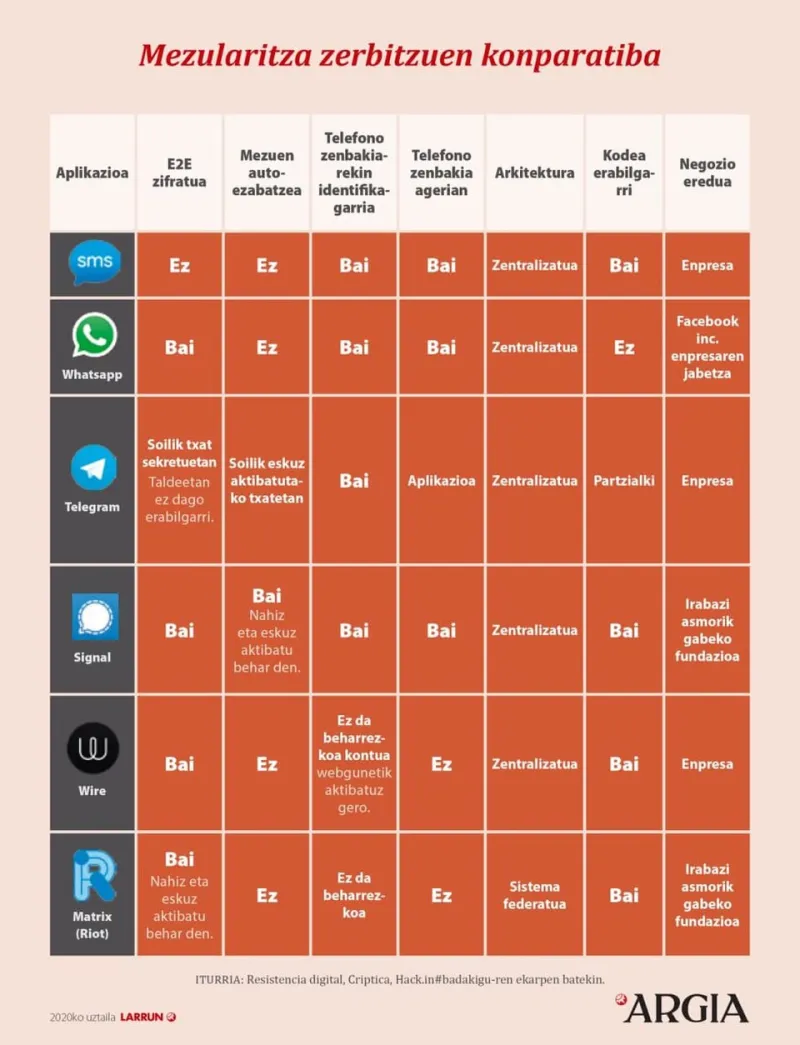
Photo: Argia - Larrun - 2020ko uztaila - ITURRIA: Resistencia digital, Criptica, + Hack.in#badakigu taldearen ekarpen batekin., CC BY-SA 4.0, via Wikimedia Commons
At some point, probably late at night, you typed something into your phone that you never sent. Maybe it was long. Maybe it was three words. Maybe you got to the end of it and held your thumb over the send button for a full ten seconds before you closed the app and put the phone face-down on your nightstand.
That message is probably still there.
Not gone, not deleted — just sitting in a draft folder, or a text thread you never cleared, or an email you saved instead of sending. A little time capsule of the version of you that wanted to say something and chose not to. These digital non-deliveries have become, for a lot of people, one of the most honest archives they have.
Which is strange, when you think about it. The things we chose to keep private might tell us more about who we were — and who we are — than anything we actually put out into the world.
The Draft as a Different Kind of Honesty
There's a particular intimacy to unsent messages that sent ones don't have. When you write something knowing it's going to be read, you edit. Not always consciously, but you do. You soften things, sharpen others, cut the parts that feel too raw or too needy or too specific. You write for an audience, even if that audience is just one person.
Drafts don't have an audience. You write them for the act of writing them — to get something out of your body and into language, even if it goes nowhere. The result is often more unguarded than anything you'd actually send.
People who've stumbled across old drafts — sometimes years after writing them — describe the experience in remarkably similar ways. There's a recognition that's almost physical: that's exactly how I felt, and I never said it to anyone. The draft becomes a record of a private emotional state that would otherwise be completely lost.
"I found an email draft from 2019 that I wrote to my dad," says Priya, a graphic designer in Philadelphia. "I never sent it. I don't even remember writing it. But when I read it, I could feel exactly where I was when I wrote it — what I was scared of, what I needed from him. I cried for like an hour."
She didn't send it then either. But she saved it somewhere else.
The Archaeology of Almost
There's a whole category of unsent messages that exist in the space between what we meant to say and what we couldn't quite bring ourselves to say. The text to an ex that you wrote at midnight and deleted before morning. The apology email you drafted six times and never sent any version of. The message to a friend you'd grown apart from, explaining how much you missed them, that lived in your drafts folder for two years before you finally deleted it.
These are the almosts — the communications that got as far as language but not as far as delivery. And they're surprisingly common.
What's interesting about them is what they reveal about the gap between our inner lives and our presented ones. We tend to think of communication as the thing we say. But the almosts suggest that for a lot of people, the more emotionally significant communication is the thing they don't say — the thing they write and hold.
Psychologists who study expressive writing have noted for decades that the act of writing something down — even without sending it — has real therapeutic value. It processes emotion, creates distance from experience, can reduce anxiety. In some ways, the unsent message is a more sophisticated version of the old advice to write an angry letter and then throw it away. Except you don't throw it away. You keep it. And years later, you find it.
When the Draft Becomes a Mirror
The most disorienting thing about finding old unsent messages isn't the emotion in them. It's the foreignness. The person who wrote that draft — the one from 2017, or 2020, or even just two years ago — used different words than you'd use now. Cared about different things. Was scared of different things. Was, in some meaningful sense, a different person.
That's not unusual. People change. But we don't usually have documentation of it this granular.
Your sent messages are a curated record — the version of yourself you chose to share. Your unsent messages are something else. They're the uncurated version. The one that didn't get edited for the relationship or the context or the time of day. Reading them is like finding a journal you don't remember keeping.
Tyler, a teacher in Seattle, went through his phone's email drafts folder after switching devices and found seventeen unsent messages spanning almost a decade. "Some of them I understood immediately — I knew why I didn't send them. But a few of them I genuinely couldn't figure out. Like, why didn't I send this? What was I protecting?"
That question — what was I protecting? — might be the most interesting one the unsent message raises. Because the decision not to send something is itself a decision. A choice about vulnerability, or timing, or self-preservation. And those choices accumulate into a kind of portrait.
What We've Stopped Saying Out Loud
There's a broader shift happening here that the unsent message quietly reflects. As digital communication has made it easier than ever to reach people — instantly, constantly, across any distance — we've paradoxically gotten worse at saying the hard things. The friction of a phone call or a handwritten letter used to force a kind of commitment. You were going to say the thing because you'd already done the work of preparing to say it.
Typing is different. Typing is easy to start and easy to abandon. Which means the draft folder fills up with all the things that almost got said — the things that needed just a little more courage, or a little better timing, or a version of us that was slightly less afraid.
Some of those things should probably stay unsent. Not every feeling needs to be delivered. Not every apology lands the way you hope. The draft folder is also a place where bad ideas go to cool down.
But some of those messages — the ones you wrote slowly and carefully and then held — maybe those deserved to go.
Check your drafts folder sometime. You might be surprised what's in there.
You might even want to finish something.