Touch Memory: The People Keeping Their Photos in Boxes on Purpose
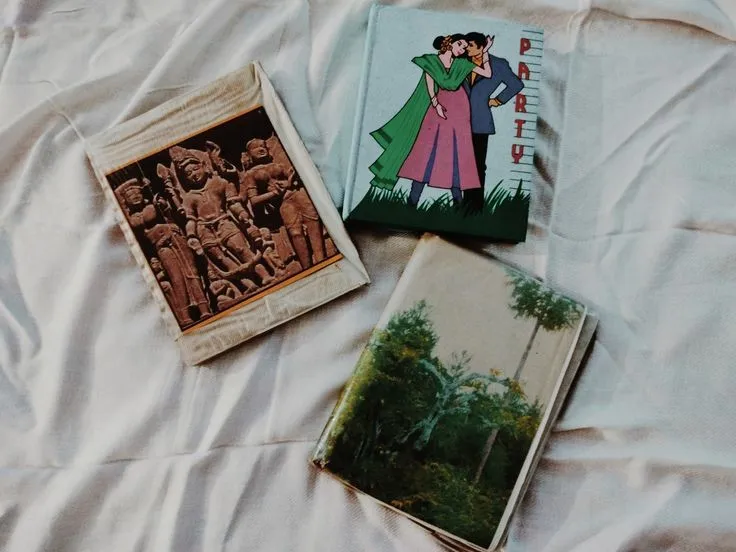
Photo: পাপৰি বৰা, CC BY-SA 4.0, via Wikimedia Commons
Somewhere in a suburb outside of Columbus, Ohio, there's a woman named Renata who has seventeen shoeboxes under her bed. Each one is stuffed with photographs — some in sleeves, some loose, some curling at the edges from humidity. Her kids have been begging her to scan them for years. Her son even bought her a flatbed scanner for Christmas two years running. Both are still in their boxes, unopened, next to the shoeboxes.
Renata is not confused about technology. She uses her phone constantly. She streams, she shops, she video-calls her grandkids. She just refuses — firmly, with a kind of cheerful stubbornness — to digitize her photos.
"When I pull out a picture," she says, "I chose to pull it out. Nobody's showing it to me because it's been three years and they want me to feel something."
That line is worth sitting with.
The Algorithm Didn't Ask If You Were Ready
If you've ever had your phone surface a memory notification — Three years ago today! — and felt a weird, slightly violated feeling, you already understand part of what Renata is protecting herself from. Platforms like Google Photos and Apple's photo library have built entire emotional architectures around your stored images. They decide when you should remember, how you should feel, and which version of your past is worth surfacing.
For a lot of people, that's a feature. For others, it's a quiet horror.
The analog holdouts — and there are more of them than you'd think — aren't Luddites. They're not people who don't understand what a cloud backup is. They're people who have thought about it and decided that the tradeoff isn't worth it. What they're protecting isn't just the photos. It's the experience of accessing them.
There's a term that keeps coming up in conversations with these people: intentional curation. When your photos live in a box or an album, you curate them whether you mean to or not. You decide what gets printed. You decide what gets kept. You decide what gets handed to someone at a family reunion. That friction — the cost of actually going to get the thing — turns every viewing into a small, deliberate act.
Digital archives don't work that way. They're frictionless by design, which sounds like an upgrade until you realize that friction was doing something.
What You Lose When You Remove the Effort
There's a concept in behavioral psychology sometimes called the IKEA effect — the idea that we value things more when we've put work into them. Physical photo albums are the IKEA effect applied to memory. You had to take the picture. You had to develop it, or order prints, or at minimum make the decision to print it. You had to put it somewhere. All of that labor attaches meaning.
Marcus, a high school history teacher in Portland who keeps two large albums of his kids' childhoods, puts it plainly: "I have about four hundred printed photos of my daughters growing up. I have probably forty thousand digital ones. The four hundred feel real. The forty thousand feel like evidence."
That word — evidence — is striking. Digital photos often function more like documentation than memory. They prove something happened. Physical photos, especially the ones you chose to keep and hold onto, feel more like the memory itself.
This isn't entirely romantic nostalgia talking. There's research suggesting that the act of physically handling objects tied to memories activates different cognitive processes than viewing them on a screen. The texture, the slight fade, the handwriting on the back — these things engage the brain in ways that a JPEG rendered at 1080p just doesn't.
The Permanence Problem
Here's the irony that the digitize-everything crowd tends to skip over: digital photos are actually less permanent than physical ones in several meaningful ways.
Formats change. Services shut down. Hard drives fail. Cloud subscriptions lapse. The photo you uploaded to a platform in 2009 may be gone, compressed beyond recognition, or locked behind a login you no longer have access to. Meanwhile, a print that's been sitting in a shoebox for forty years is still a print.
The analog holdouts know this. It's often one of the first things they bring up. Not in a smug way — more like someone who made a decision and watched it slowly be validated.
Lena, who lives in Chicago and has kept every photograph she's ever taken printed and organized since 1994, lost almost everything she'd stored digitally in a hard drive crash in 2011. "The cloud wasn't really a thing yet, not the way it is now. But I still had my albums. I still had the boxes. Those are the only pictures I have of my twenties."
The Resistance That Isn't Denial
It would be easy to read all of this as nostalgia cosplay — people who can't let go of analog life because they're scared of what comes next. And sure, for some people, that might be part of it. But when you actually talk to these folks, what you find is something more considered.
They're not refusing to move forward. They're refusing to accept that the new way is automatically better just because it's the new way. They looked at what digitization offered — accessibility, searchability, infinite storage, algorithm-assisted memory — and weighed it against what it cost: agency, intentionality, the right to forget on their own schedule.
And they said no thanks.
There's something quietly radical about that. In a culture that has spent twenty years telling everyone to scan, upload, back up, and share, choosing to keep things in a box under the bed is almost a political act. It's saying: my memory is mine, and I'll access it when I decide to.
Renata's shoeboxes aren't a failure to adapt. They're a preference. A considered, deliberate, slightly inconvenient preference that she has made peace with completely.
The scanner her son gave her is still in the box. She says she might open it eventually.
She doesn't sound like she means it.